

Amaranth
Amaranth is a small delicate microgreen with a red stem and a mild, earthy taste. It is excellent with XXXXX. Amaranth microgreens are rich in multiple essential nutrients, including the following potential health benefits:
- Vitamin A: Crucial for cell division, growth, vision, immunity, and reproduction
- Vitamin B: Plays a key role in metabolism, converting food into energy; brain development; and regulation of immune responses
- Vitamin C: Crucial for the development, growth, and repair of body tissues and serves as an antioxidant, protecting cells against the effects of free radicals, which are molecules produced during the breakdown of food or exposure to radiation, tobacco smoke, and other external sources. (Free radicals are associated with the development of heart disease, cancer, Alzheimer’s disease, and other diseases.)
- Vitamin K: Plays a key role in wound healing, blood clotting, and bone growth
- Calcium: Critical in building and maintaining healthy bones and teeth and proper heart, nerve, and muscle functioning and may help reduce the risk of heart disease
- Copper: Helps to maintain healthy bones; proper functioning of nerves, blood vessels, and the immune system; the formation of red blood cells; and proper iron absorption
- Fiber-rich phosphorus: Important in managing the body’s energy use and storage, filtering and removing waste from the kidneys, and promoting nerve conduction
- Folate: Belongs to the B vitamins and is crucial in the formation of red blood cells, proper cellular growth and function, and reduced risk of brain and congenital spinal disabilities during pregnancy
- Iron: Helps produce the oxygen-carrying component (hemoglobin) in red blood cells, enhances the body’s energy use, and strengthens the immune system.
- Magnesium: Crucial in numerous biochemical reactions in the body, regulating blood pressure, supporting the immune system, and helping with muscle and nerve functioning, reducing the possibility of kidney stones
- Manganese: Important for bone and connective tissue development, blood sugar regulation, and normal brain and nerve function
- Potassium: Needed for proper cellular functioning, regulating the heartbeat, synthesizing protein, regulating muscle and nerve functioning, and metabolizing carbohydrates

Arugula
Arugula is one of our most popular microgreens with a spicy, peppery taste. Add it to eggs, bagels, salads or more for an extra kick! Arugula microgreens are rich in multiple essential nutrients, including the following potential health benefits:
- Vitamin A: Crucial for cell division, growth, vision, immunity, and reproduction
- Vitamin B6: Plays a key role in metabolism, converting food into energy; brain development; and regulation of immune responses
- Vitamin C: Crucial for the development, growth, and repair of body tissues and serves as an antioxidant, protecting cells against the effects of free radicals, which are molecules produced during the breakdown of food or exposure to radiation, tobacco smoke, and other external sources. (Free radicals are associated with the development of heart disease, cancer, Alzheimer’s disease, and other diseases.)
- Vitamin E: Neutralizes or reduces free radicals, protecting molecular and cellular components, preventing free radicals from oxygenating cholesterol, thus reducing the chances of stroke or heart disease
- Vitamin K: Plays a key role in wound healing, blood clotting, and bone growth
- Calcium: Critical in building and maintaining healthy bones and teeth and proper heart, nerve, and muscle functioning and may help reduce the risk of heart disease
- Copper: Helps to maintain healthy bones; proper functioning of nerves, blood vessels, and the immune system; the formation of red blood cells; and proper iron absorption
- Fiber-rich phosphorus: Important in managing the body’s energy use and storage, filtering and removing waste from the kidneys, and promoting nerve conduction
- Folate: Belongs to the B vitamins and is crucial in the formation of red blood cells, proper cellular growth and function, and reduced risk of brain and congenital spinal disabilities during pregnancy
- Iron: Helps produce the oxygen-carrying component (hemoglobin) in red blood cells, enhances the body’s energy use, and strengthens the immune system.
- Magnesium: Crucial in numerous biochemical reactions in the body, regulating blood pressure, supporting the immune system, and helping with muscle and nerve functioning, reducing the possibility of kidney stones
- Manganese: Important for bone and connective tissue development, blood sugar regulation, and normal brain and nerve function
- Potassium: Needed for proper cellular functioning, regulating the heartbeat, synthesizing protein, regulating muscle and nerve functioning, and metabolizing carbohydrates
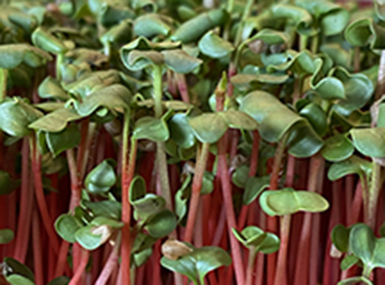

Beet
Beet microgreens have colorful red stems and an earthy flavor. A fantastic garnish or accent to any dish for its beauty.Beet microgreens are rich in multiple essential nutrients, including the following potential health benefits:
- Vitamin A: Crucial for cell division, growth, vision, immunity, and reproduction
- Vitamin B6: Plays a key role in metabolism, converting food into energy; brain development; and regulation of immune responses
- Vitamin C: Crucial for the development, growth, and repair of body tissues and serves as an antioxidant, protecting cells against the effects of free radicals, which are molecules produced during the breakdown of food or exposure to radiation, tobacco smoke, and other external sources. (Free radicals are associated with the development of heart disease, cancer, Alzheimer’s disease, and other diseases.)
- Vitamin E: Neutralizes or reduces free radicals, protecting molecular and cellular components, preventing free radicals from oxygenating cholesterol, thus reducing the chances of stroke or heart disease
- Vitamin K: Plays a key role in wound healing, blood clotting, and bone growth
- Calcium: Critical in building and maintaining healthy bones and teeth and proper heart, nerve, and muscle functioning and may help reduce the risk of heart disease
- Copper: Helps to maintain healthy bones; proper functioning of nerves, blood vessels, and the immune system; the formation of red blood cells; and proper iron absorption
- Fiber-rich phosphorus: Important in managing the body’s energy use and storage, filtering and removing waste from the kidneys, and promoting nerve conduction
- Folate: Belongs to the B vitamins and is crucial in the formation of red blood cells, proper cellular growth and function, and reduced risk of brain and congenital spinal disabilities during pregnancy
- Iron: Helps produce the oxygen-carrying component (hemoglobin) in red blood cells, enhances the body’s energy use, and strengthens the immune system.
- Magnesium: Crucial in numerous biochemical reactions in the body, regulating blood pressure, supporting the immune system, and helping with muscle and nerve functioning, reducing the possibility of kidney stones
- Manganese: Important for bone and connective tissue development, blood sugar regulation, and normal brain and nerve function
- Potassium: Needed for proper cellular functioning, regulating the heartbeat, synthesizing protein, regulating muscle and nerve functioning, and metabolizing carbohydrates

Broccoli
Broccoli colors up quickly and is greener than most other crops. It is a hardy and substantial microgreen that has a fresh, mild cabbage flavor. It is an excellent choice as a base for any micro greens salad.Broccoli microgreens are rich in multiple essential nutrients, including the following potential health benefits:
- Vitamin A: Crucial for cell division, growth, vision, immunity, and reproduction
- Vitamin B6: Plays a key role in metabolism, converting food into energy; brain development; and regulation of immune responses
- Vitamin C: Crucial for the development, growth, and repair of body tissues and serves as an antioxidant, protecting cells against the effects of free radicals, which are molecules produced during the breakdown of food or exposure to radiation, tobacco smoke, and other external sources. (Free radicals are associated with the development of heart disease, cancer, Alzheimer’s disease, and other diseases.)
- Vitamin E: Neutralizes or reduces free radicals, protecting molecular and cellular components, preventing free radicals from oxygenating cholesterol, thus reducing the chances of stroke or heart disease
- Vitamin K: Plays a key role in wound healing, blood clotting, and bone growth
- Calcium: Critical in building and maintaining healthy bones and teeth and proper heart, nerve, and muscle functioning and may help reduce the risk of heart disease
- Copper: Helps to maintain healthy bones; proper functioning of nerves, blood vessels, and the immune system; the formation of red blood cells; and proper iron absorption
- Fiber-rich phosphorus: Important in managing the body’s energy use and storage, filtering and removing waste from the kidneys, and promoting nerve conduction
- Folate: Belongs to the B vitamins and is crucial in the formation of red blood cells, proper cellular growth and function, and reduced risk of brain and congenital spinal disabilities during pregnancy
- Iron: Helps produce the oxygen-carrying component (hemoglobin) in red blood cells, enhances the body’s energy use, and strengthens the immune system.
- Magnesium: Crucial in numerous biochemical reactions in the body, regulating blood pressure, supporting the immune system, and helping with muscle and nerve functioning, reducing the possibility of kidney stones
- Manganese: Important for bone and connective tissue development, blood sugar regulation, and normal brain and nerve function
- Potassium: Needed for proper cellular functioning, regulating the heartbeat, synthesizing protein, regulating muscle and nerve functioning, and metabolizing carbohydrates

Chard (via healthline)
Chard has a mild delicate spinach flavor and amazing assortment of colors. Makes an excellent choice to add to any micro mix for the flavor and color.Chard microgreens are rich in multiple essential nutrients, including the following potential health benefits:
- Vitamin A: Crucial for cell division, growth, vision, immunity, and reproduction
- Vitamin C: Crucial for the development, growth, and repair of body tissues and serves as an antioxidant, protecting cells against the effects of free radicals, which are molecules produced during the breakdown of food or exposure to radiation, tobacco smoke, and other external sources. (Free radicals are associated with the development of heart disease, cancer, Alzheimer’s disease, and other diseases.)
- Vitamin E: Neutralizes or reduces free radicals, protecting molecular and cellular components, preventing free radicals from oxygenating cholesterol, thus reducing the chances of stroke or heart disease
- Vitamin K: Plays a key role in wound healing, blood clotting, and bone growth
- Calcium: Critical in building and maintaining healthy bones and teeth and proper heart, nerve, and muscle functioning and may help reduce the risk of heart disease
- Copper: Helps to maintain healthy bones; proper functioning of nerves, blood vessels, and the immune system; the formation of red blood cells; and proper iron absorption
- Iron: Helps produce the oxygen-carrying component (hemoglobin) in red blood cells, enhances the body’s energy use, and strengthens the immune system.
- Magnesium: Crucial in numerous biochemical reactions in the body, regulating blood pressure, supporting the immune system, and helping with muscle and nerve functioning, reducing the possibility of kidney stones
- Manganese: Important for bone and connective tissue development, blood sugar regulation, and normal brain and nerve function
- Potassium: Needed for proper cellular functioning, regulating the heartbeat, synthesizing protein, regulating muscle and nerve functioning, and metabolizing carbohydrates

Cilantro
Cilantro microgreens have a more intense flavor than adult cilantro. Much fresher and stronger than grocery store cilantro. Use in salsa, indian recipes or any recipe that calls for cilantro.Cilantro microgreens are rich in multiple essential nutrients, including the following potential health benefits:
- Vitamin A: Crucial for cell division, growth, vision, immunity, and reproduction
- Vitamin C: Crucial for the development, growth, and repair of body tissues and serves as an antioxidant, protecting cells against the effects of free radicals, which are molecules produced during the breakdown of food or exposure to radiation, tobacco smoke, and other external sources. (Free radicals are associated with the development of heart disease, cancer, Alzheimer’s disease, and other diseases.)
- Vitamin K: Plays a key role in wound healing, blood clotting, and bone growth
- Calcium: Critical in building and maintaining healthy bones and teeth and proper heart, nerve, and muscle functioning and may help reduce the risk of heart disease
- Folate: Belongs to the B vitamins and is crucial in the formation of red blood cells, proper cellular growth and function, and reduced risk of brain and congenital spinal disabilities during pregnancy
- Iron: Helps produce the oxygen-carrying component (hemoglobin) in red blood cells, enhances the body’s energy use, and strengthens the immune system.
- Magnesium: Crucial in numerous biochemical reactions in the body, regulating blood pressure, supporting the immune system, and helping with muscle and nerve functioning, reducing the possibility of kidney stones
- Potassium: Needed for proper cellular functioning, regulating the heartbeat, synthesizing protein, regulating muscle and nerve functioning, and metabolizing carbohydrates

Kale
Red Russian kale has a tint of color on the underside of the leaves and a beautiful fringe to the leaves when grown to the true leaf stage. Kale has a nice mild flavor. It makes a great choice as a base to any microgreens salad. Kale microgreens are rich in multiple essential nutrients, including the following potential health benefits:
- Vitamin A: Crucial for cell division, growth, vision, immunity, and reproduction
- Vitamin B6: Plays a key role in metabolism, converting food into energy; brain development; and regulation of immune responses
- Vitamin C: Crucial for the development, growth, and repair of body tissues and serves as an antioxidant, protecting cells against the effects of free radicals, which are molecules produced during the breakdown of food or exposure to radiation, tobacco smoke, and other external sources. (Free radicals are associated with the development of heart disease, cancer, Alzheimer’s disease, and other diseases.)
- Vitamin E: Neutralizes or reduces free radicals, protecting molecular and cellular components, preventing free radicals from oxygenating cholesterol, thus reducing the chances of stroke or heart disease
- Vitamin K: Plays a key role in wound healing, blood clotting, and bone growth
- Calcium: Critical in building and maintaining healthy bones and teeth and proper heart, nerve, and muscle functioning and may help reduce the risk of heart disease
- Copper: Helps to maintain healthy bones; proper functioning of nerves, blood vessels, and the immune system; the formation of red blood cells; and proper iron absorption
- Fiber-rich phosphorus: Important in managing the body’s energy use and storage, filtering and removing waste from the kidneys, and promoting nerve conduction
- Folate: Belongs to the B vitamins and is crucial in the formation of red blood cells, proper cellular growth and function, and reduced risk of brain and congenital spinal disabilities during pregnancy
- Iron: Helps produce the oxygen-carrying component (hemoglobin) in red blood cells, enhances the body’s energy use, and strengthens the immune system.
- Magnesium: Crucial in numerous biochemical reactions in the body, regulating blood pressure, supporting the immune system, and helping with muscle and nerve functioning, reducing the possibility of kidney stones
- Manganese: Important for bone and connective tissue development, blood sugar regulation, and normal brain and nerve function
- Potassium: Needed for proper cellular functioning, regulating the heartbeat, synthesizing protein, regulating muscle and nerve functioning, and metabolizing carbohydrates

Pea Shoots
Pea shoots microgreens are rich in multiple essential nutrients, including the following potential health benefits:
- Vitamin A: Crucial for cell division, growth, vision, immunity, and reproduction
- Vitamin B6: Plays a key role in metabolism, converting food into energy; brain development; and regulation of immune responses
- Vitamin C: Crucial for the development, growth, and repair of body tissues and serves as an antioxidant, protecting cells against the effects of free radicals, which are molecules produced during the breakdown of food or exposure to radiation, tobacco smoke, and other external sources. (Free radicals are associated with the development of heart disease, cancer, Alzheimer’s disease, and other diseases.)
- Calcium: Critical in building and maintaining healthy bones and teeth and proper heart, nerve, and muscle functioning and may help reduce the risk of heart disease
- Copper: Helps to maintain healthy bones; proper functioning of nerves, blood vessels, and the immune system; the formation of red blood cells; and proper iron absorption
- Fiber-rich phosphorus: Important in managing the body’s energy use and storage, filtering and removing waste from the kidneys, and promoting nerve conduction
- Folate: Belongs to the B vitamins and is crucial in the formation of red blood cells, proper cellular growth and function, and reduced risk of brain and congenital spinal disabilities during pregnancy
- Iron: Helps produce the oxygen-carrying component (hemoglobin) in red blood cells, enhances the body’s energy use, and strengthens the immune system.
- Magnesium: Crucial in numerous biochemical reactions in the body, regulating blood pressure, supporting the immune system, and helping with muscle and nerve functioning, reducing the possibility of kidney stones
- Manganese: Important for bone and connective tissue development, blood sugar regulation, and normal brain and nerve function
Radish
Radish is a green crop with an intense radish flavor great in any microgreen salad or full sized salad. Use instead of sliced radish vegetables anywhere you would normally use radish.Radish microgreens are rich in multiple essential nutrients, including the following potential health benefits:
- Vitamin A: Crucial for cell division, growth, vision, immunity, and reproduction
- Vitamin B6: Plays a key role in metabolism, converting food into energy; brain development; and regulation of immune responses
- Vitamin C: Crucial for the development, growth, and repair of body tissues and serves as an antioxidant, protecting cells against the effects of free radicals, which are molecules produced during the breakdown of food or exposure to radiation, tobacco smoke, and other external sources. (Free radicals are associated with the development of heart disease, cancer, Alzheimer’s disease, and other diseases.)
- Vitamin E: Neutralizes or reduces free radicals, protecting molecular and cellular components, preventing free radicals from oxygenating cholesterol, thus reducing the chances of stroke or heart disease
- Vitamin K: Plays a key role in wound healing, blood clotting, and bone growth
- Calcium: Critical in building and maintaining healthy bones and teeth and proper heart, nerve, and muscle functioning and may help reduce the risk of heart disease
- Copper: Helps to maintain healthy bones; proper functioning of nerves, blood vessels, and the immune system; the formation of red blood cells; and proper iron absorption
- Fiber-rich phosphorus: Important in managing the body’s energy use and storage, filtering and removing waste from the kidneys, and promoting nerve conduction
- Folate: Belongs to the B vitamins and is crucial in the formation of red blood cells, proper cellular growth and function, and reduced risk of brain and congenital spinal disabilities during pregnancy
- Iron: Helps produce the oxygen-carrying component (hemoglobin) in red blood cells, enhances the body’s energy use, and strengthens the immune system.
- Magnesium: Crucial in numerous biochemical reactions in the body, regulating blood pressure, supporting the immune system, and helping with muscle and nerve functioning, reducing the possibility of kidney stones
- Manganese: Important for bone and connective tissue development, blood sugar regulation, and normal brain and nerve function
- Potassium: Needed for proper cellular functioning, regulating the heartbeat, synthesizing protein, regulating muscle and nerve functioning, and metabolizing carbohydrates
Sorrel
Sorrel microgreens are rich in multiple essential nutrients, including the following potential health benefits:
- Vitamin A: Crucial for cell division, growth, vision, immunity, and reproduction
- Vitamin B6: Plays a key role in metabolism, converting food into energy; brain development; and regulation of immune responses
- Vitamin C: Crucial for the development, growth, and repair of body tissues and serves as an antioxidant, protecting cells against the effects of free radicals, which are molecules produced during the breakdown of food or exposure to radiation, tobacco smoke, and other external sources. (Free radicals are associated with the development of heart disease, cancer, Alzheimer’s disease, and other diseases.)
- Copper: Helps to maintain healthy bones; proper functioning of nerves, blood vessels, and the immune system; the formation of red blood cells; and proper iron absorption
- Fiber-rich phosphorus: Important in managing the body’s energy use and storage, filtering and removing waste from the kidneys, and promoting nerve conduction
- Iron: Helps produce the oxygen-carrying component (hemoglobin) in red blood cells, enhances the body’s energy use, and strengthens the immune system.
- Magnesium: Crucial in numerous biochemical reactions in the body, regulating blood pressure, supporting the immune system, and helping with muscle and nerve functioning, reducing the possibility of kidney stones
- Manganese: Important for bone and connective tissue development, blood sugar regulation, and normal brain and nerve function
- Potassium: Needed for proper cellular functioning, regulating the heartbeat, synthesizing protein, regulating muscle and nerve functioning, and metabolizing carbohydrates
Sunflower
Sunflower microgreens are large, substantial greens that are crunchy and have a pleasant nutty flavor. We love to use them as a base for any microgreens salad. They make an excellent snack! We recommend this as a staple of any crop or microgreens salad.Sunflower microgreens are rich in multiple essential nutrients, including the following potential health benefits:
- Vitamin A: Crucial for cell division, growth, vision, immunity, and reproduction
- Vitamin B6: Plays a key role in metabolism, converting food into energy; brain development; and regulation of immune responses
- Vitamin C: Crucial for the development, growth, and repair of body tissues and serves as an antioxidant, protecting cells against the effects of free radicals, which are molecules produced during the breakdown of food or exposure to radiation, tobacco smoke, and other external sources. (Free radicals are associated with the development of heart disease, cancer, Alzheimer’s disease, and other diseases.)
- Vitamin D: Plays a role in artery health and prevention of cholesterol buildup, controls calcium levels in the blood
- Vitamin E: Neutralizes or reduces free radicals, protecting molecular and cellular components, preventing free radicals from oxygenating cholesterol, thus reducing the chances of stroke or heart disease
- Vitamin K: Plays a key role in wound healing, blood clotting, and bone growth
- Calcium: Critical in building and maintaining healthy bones and teeth and proper heart, nerve, and muscle functioning and may help reduce the risk of heart disease
- Copper: Helps to maintain healthy bones; proper functioning of nerves, blood vessels, and the immune system; the formation of red blood cells; and proper iron absorption
- Fiber-rich phosphorus: Important in managing the body’s energy use and storage, filtering and removing waste from the kidneys, and promoting nerve conduction
- Folate: Belongs to the B vitamins and is crucial in the formation of red blood cells, proper cellular growth and function, and reduced risk of brain and congenital spinal disabilities during pregnancy
- Iron: Helps produce the oxygen-carrying component (hemoglobin) in red blood cells, enhances the body’s energy use, and strengthens the immune system.
- Magnesium: Crucial in numerous biochemical reactions in the body, regulating blood pressure, supporting the immune system, and helping with muscle and nerve functioning, reducing the possibility of kidney stones
- Manganese: Important for bone and connective tissue development, blood sugar regulation, and normal brain and nerve function
- Potassium: Needed for proper cellular functioning, regulating the heartbeat, synthesizing protein, regulating muscle and nerve functioning, and metabolizing carbohydrates